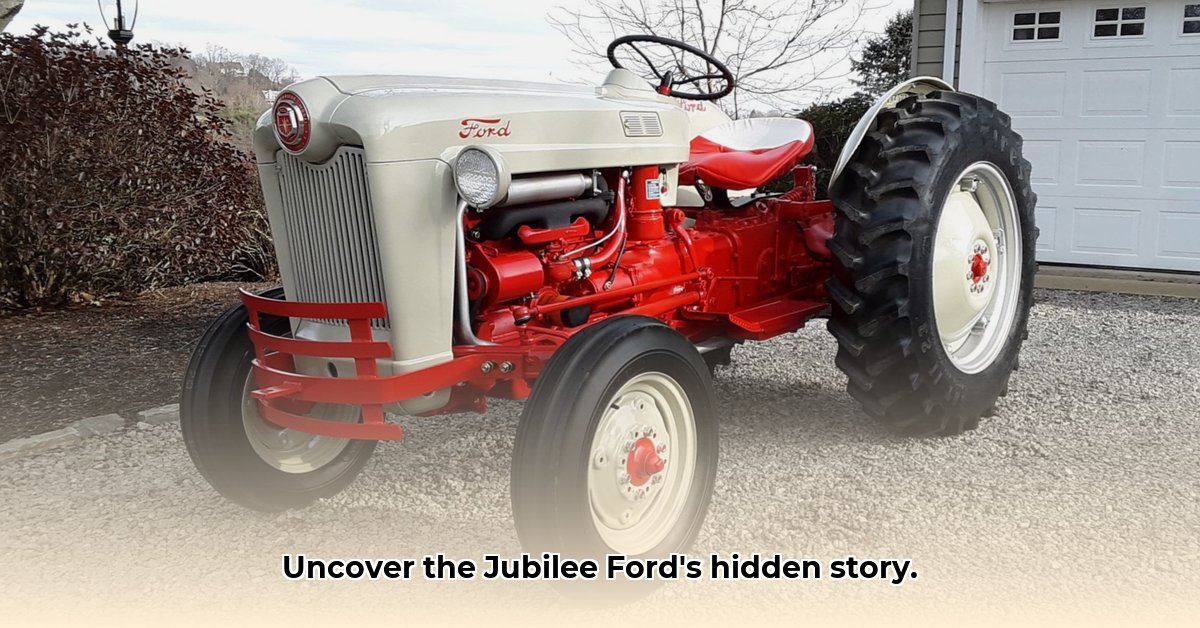
Jubilee Ford Tractor: A Piece of Farming History
The Ford NAA, affectionately nicknamed the "Golden Jubilee," wasn't just another farm tractor; it was a revolutionary machine. Introduced in 1953, it offered a simple, affordable, and reliable way for farmers to mechanize their operations—a pivotal moment in agricultural history. Think of it as the Model T of tractors: accessible and impactful. This seemingly straightforward machine profoundly influenced food production and daily life on farms globally. But what exactly made the Jubilee so special? Let's explore its fascinating story. For more Ford tractor models, check out this helpful resource.
More Than Just Horsepower: Understanding the NAA's Design
The heart of this iconic tractor was a gasoline engine, generating approximately 28 to 30 horsepower (hp). While modest by today's standards, this output was sufficient for most farming tasks in the 1950s. The NAA’s two-wheel-drive system, common for its era, provided surprisingly effective traction in various field conditions. Fuel efficiency wasn't a primary design consideration given the relatively low cost of gasoline at the time. Its uncomplicated design made maintenance straightforward—a crucial advantage for farmers. This simplicity played a significant role in the tractor's widespread adoption and lasting popularity. Did this simplicity, however, come at the cost of other features farmers desired?
NAA Specifications
| Specification | Value | Additional Notes |
|---|---|---|
| Engine Type | Gasoline | The most common and readily available fuel source then. |
| Horsepower | Approximately 28-30 hp | Could vary slightly based on specific configurations. |
| Drive Type | Two-Wheel Drive | Standard for tractors of that era; provided sufficient traction for many applications. |
| Transmission | Manual | Required operator skill and engagement; not automatic. |
Bringing Your Jubilee Back to Life: A Restoration Guide
Restoring a vintage Jubilee is a rewarding journey, offering a unique connection to agricultural history. This step-by-step guide helps navigate the process:
Complete Inspection: Begin with a meticulous examination of your tractor, documenting its condition with detailed notes and photographs. Identify any missing parts or significant damage.
The Part Hunt: Sourcing parts for a vintage tractor can be challenging. Online forums dedicated to vintage tractors, auctions, and salvage yards are your best resources. Be patient; finding the right parts may require time and persistence. What are your most efficient strategies for sourcing rare parts?
Careful Disassembly: Disassemble the tractor methodically, meticulously documenting each step with clear photos or videos. This comprehensive record ensures a smooth reassembly. Label every component carefully.
Repair, Replace, and Refurbish: Thoroughly clean each part. Repair components where possible, replace worn-out parts, and consider professional restoration assistance for complex repairs. Matching the original paint color is crucial for authenticity. How do you efficiently manage the cleaning and restoration of numerous parts?
Reassembly – The Fun (and Tricky) Part: Utilizing your detailed documentation, carefully reassemble the tractor. Proceed slowly, double-checking each step to ensure accuracy.
Testing and Tweaking: Before field operation, rigorously test all functions. Make any necessary adjustments to guarantee smooth operation. What safety precautions should be observed during the testing phase?
The Ups and Downs of Tractor Restoration
Advantages
- Deep Satisfaction: A profound sense of accomplishment comes from restoring a piece of history.
- Unique Piece: Owning a uniquely restored tractor with a rich history.
- Historical Connection: A direct connection to the agricultural heritage of a bygone era.
Challenges
- Part Scarcity: Finding original or compatible replacement parts can be difficult and costly.
- Specialized Skills: Restoration requires mechanical aptitude and specialized tools.
- Time Commitment: The restoration process demands a considerable time investment.
The Lasting Impact of the Ford NAA
The Jubilee’s legacy extends far beyond the fields it served. It symbolizes a pivotal moment in agricultural history. While its technology seems basic compared to modern tractors, its impact on production was undeniable. The NAA’s design has even prompted discussions about its applicability to sustainable farming practices. Its story illuminates how technology has advanced in agriculture and provides insights into improving agricultural access in developing regions. What further research topics could illuminate the NAA's impact on society?
The Ford NAA is more than a relic; it's a piece of living history. Further exploration could reveal more about its influence on farm life and its contribution to the evolution of sustainable agricultural methods. Its story serves as a testament to ingenuity and a glimpse into the future of farming.